
Blog
TestNG @Test Annotation

TestNG @Test Annotation
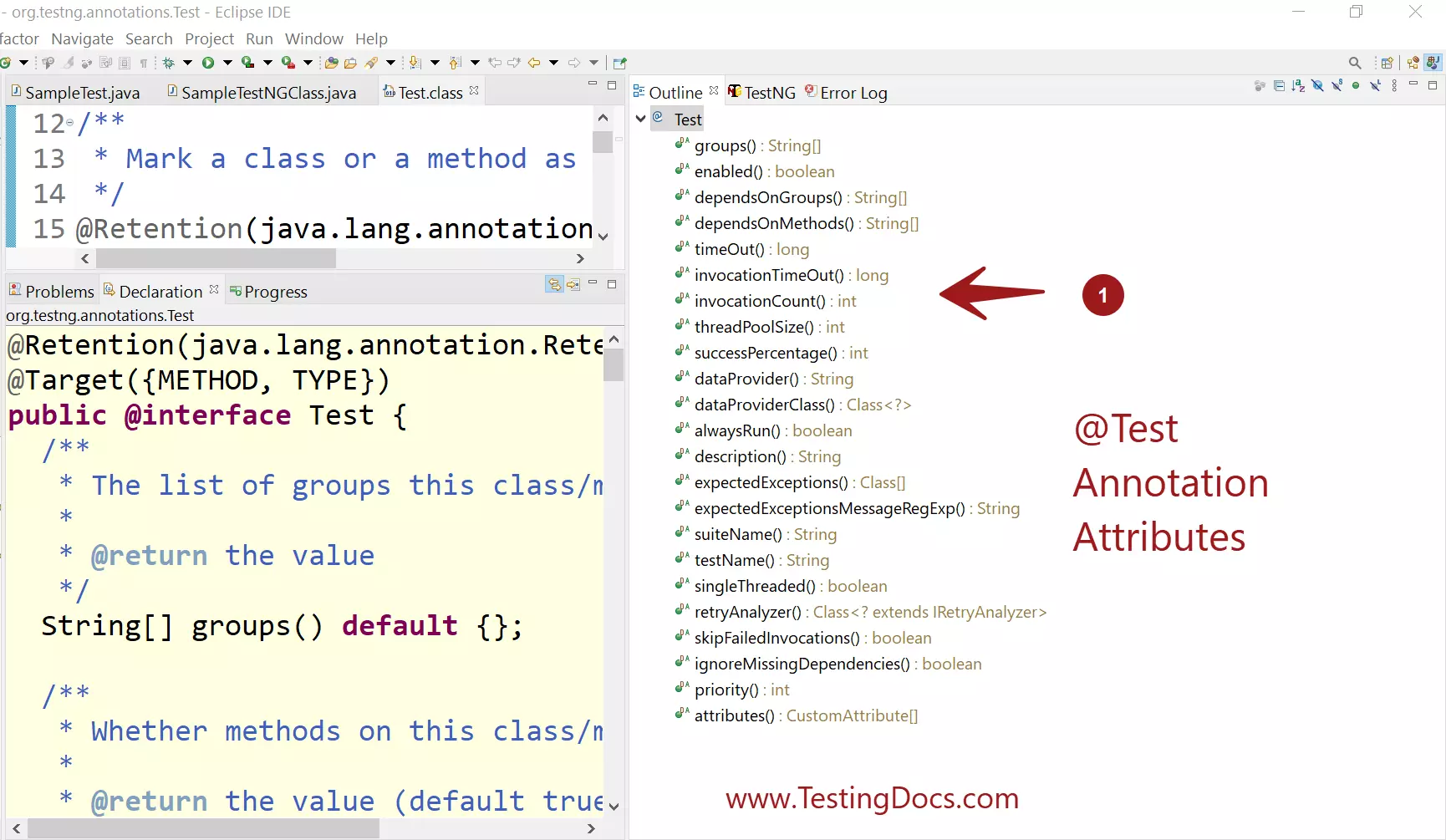
@Test is the basic annotation of the TestNG framework. We can mark a class or a test with this annotation as part of TestNG tests. If we apply the @Test at the class level all the public methods inside the class are marked as test methods for the TestNG tests. Test annotation has a lot of attributes that we can use along with the annotation, as shown in the below picture.
@Test
We will discuss some things about Test annotation in this post.
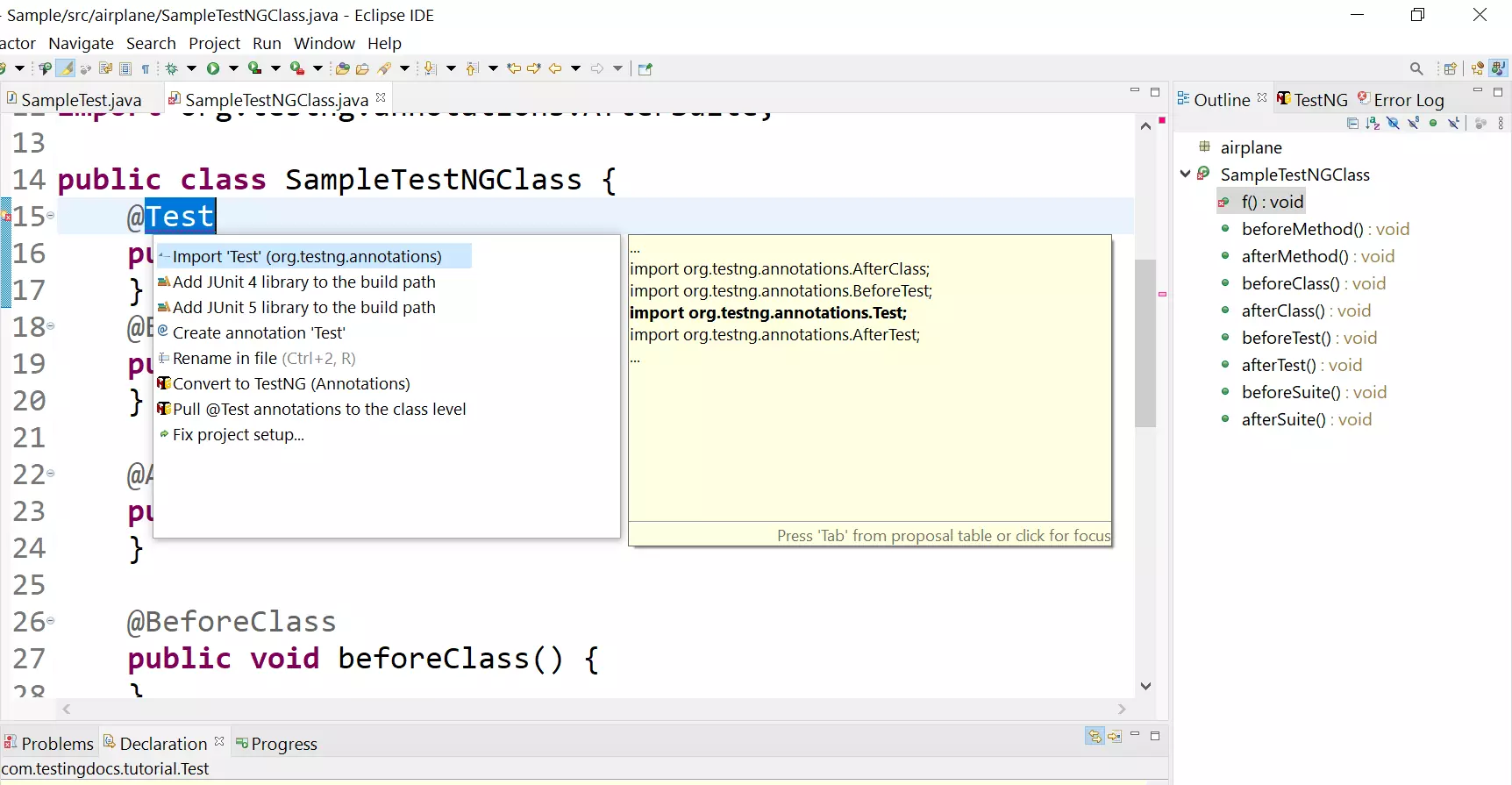
Import Test annotation in a test class.
Hover on the @Test annotation and import as shown.
description
The description of the method. The string will appear in the HTML report and on the standard output if verbose >= 2.
Code snippet:
package com.testingdocs.testng.sample;

import org.testng.annotations.Test;

public class TestAnnotationExample
{
  @Test(description="SampleDescription")
  public void sampleTestName()
  {
    System.out.println("Sample Test");
  }

}
Run output:
PASSED: sampleTestName
SampleDescription
===============================================
Default test
Tests run: 1, Failures: 0, Skips: 0
===============================================
groups
The list of groups the class/method belongs to.
@Test(groups="group1")
 public void test1()
 {
  System.out.println("Group1 test");
 }
Consider reading : TestNG Test Groups
enabled
Specifies whether methods on the class/method are enabled or disabled.
dependsOnGroups
The list of groups the method depends on. Every method member of one of these groups is guaranteed to have been invoked before this method. Furthermore, if any of these methods were not a SUCCESS, this test method would not be run and would be flagged as a SKIP.
dependsOnMethods
The list of methods the method depends on. There is no guarantee on the order in which the methods depended upon will be run, but you are guaranteed that all these methods will be run before the test method that contains this annotation is run. Furthermore, if any of these methods was not a SUCCESS, this test method would not be
run and will be flagged as an SKIP.
If some of these methods have been overloaded, all the overloaded versions will be run.
timeOut
The maximum number of milliseconds the test should take. It will be marked as a FAIL if it hasn’t returned after this time.