
Types of Compatibility Testing

Types of Compatibility Testing
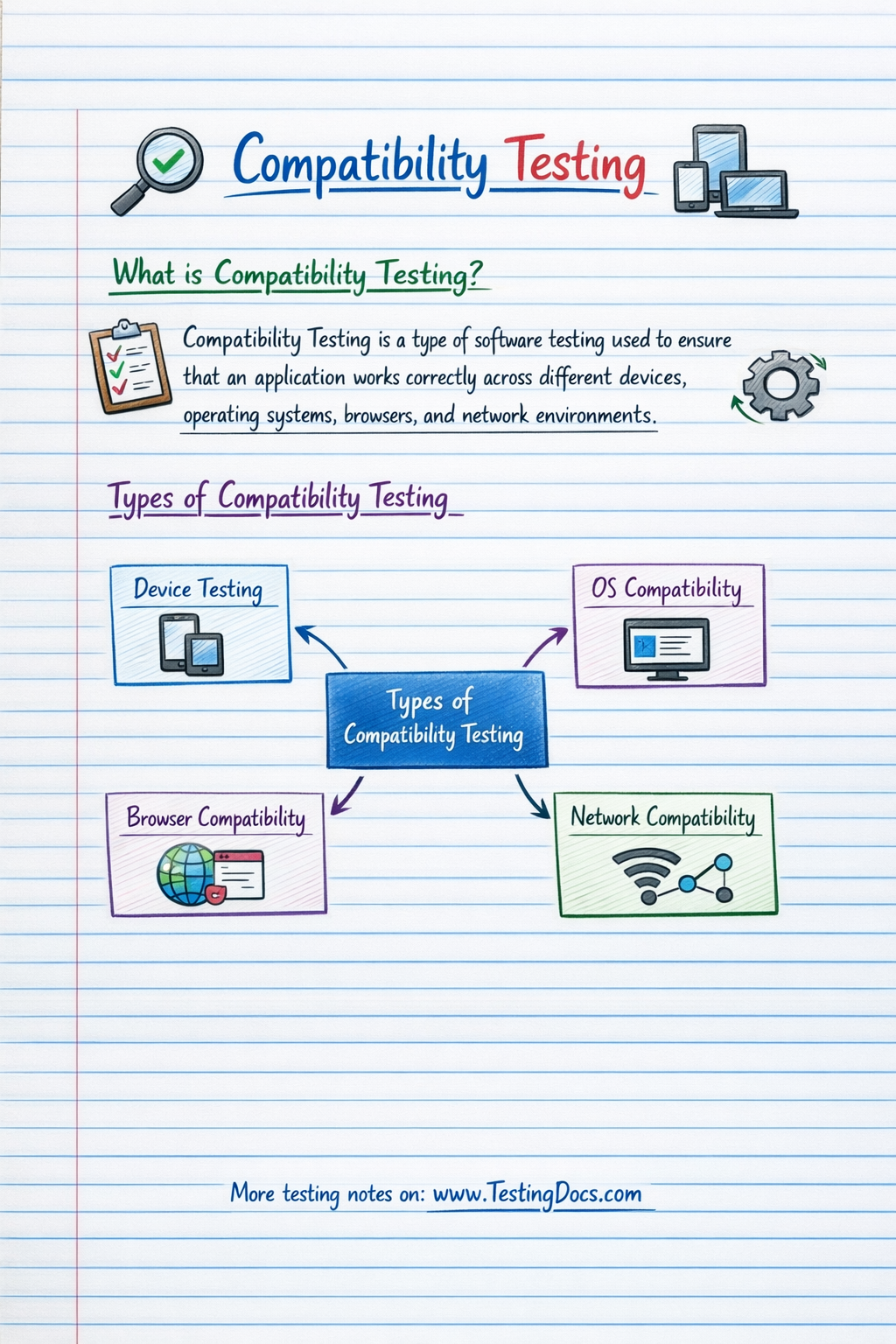
Compatibility Testing can be broadly classified into:
- Hardware
- Software
- Network
Hardware Compatibility Testing
Hardware compatibility testing ensures that the software works smoothly with different hardware configurations. This type of testing covers components such as:
- Processors (Intel, AMD)
- Graphics Cards (NVIDIA, AMD)
- Peripherals (Printers, Scanners, USB Devices)
Hardware variations can significantly impact software performance, especially for resource-intensive applications like games and graphic design software. Testing against a range of hardware configurations helps prevent potential issues related to compatibility.
Software Compatibility Testing
Software compatibility testing focuses on the interaction between the application and other software environments. It checks compatibility with:
- Operating Systems (Windows, macOS, Linux)
- Third-party applications (Antivirus, Firewalls, Databases)
- Frameworks and Libraries
For instance, an application might behave differently when certain antivirus software is active, or it might fail if a required library is missing. Software compatibility testing helps detect these conflicts early.
Network Compatibility Testing
Network compatibility testing examines the softwareâs performance across different network environments, such as:
- Wi-Fi vs. Mobile Data (3G, 4G, 5G)
- Varying Bandwidths and Latencies
- Different Network Configurations (VPN, Proxy Servers)
This type of testing ensures that the application remains responsive and functional even under different network conditions, improving user experience in diverse scenarios.