
What Is Algo Trading?

What Is Algo Trading?
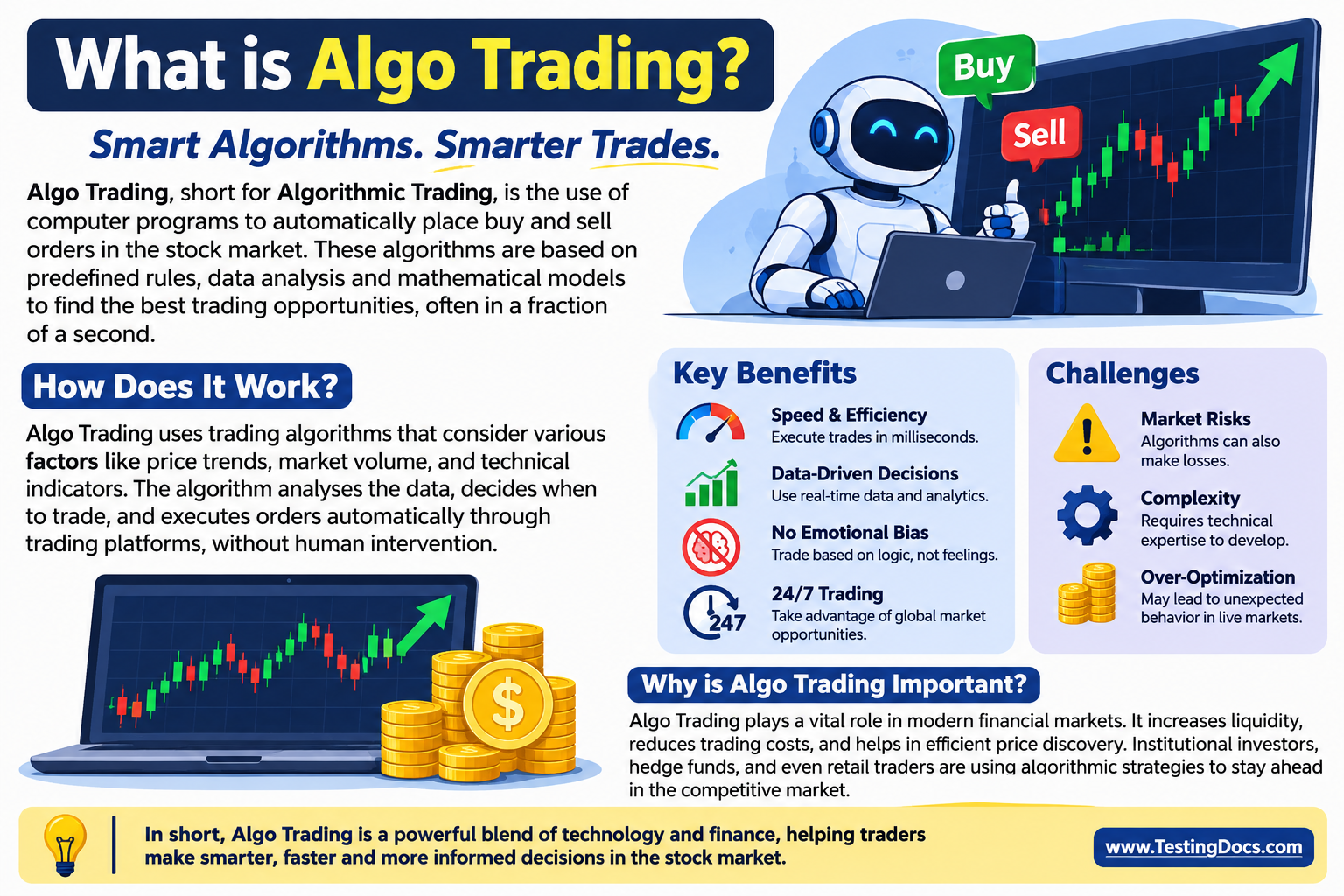
Algorithmic trading, commonly called algo trading, is the use of computer programs to place buy or sell orders in financial markets. Instead of manually watching prices and clicking buttons, a trader defines a set of rules. Software then studies market information and can send orders when those rules are met. The rules may use price, trading volume, timing, or technical indicators.
How Does It Work?
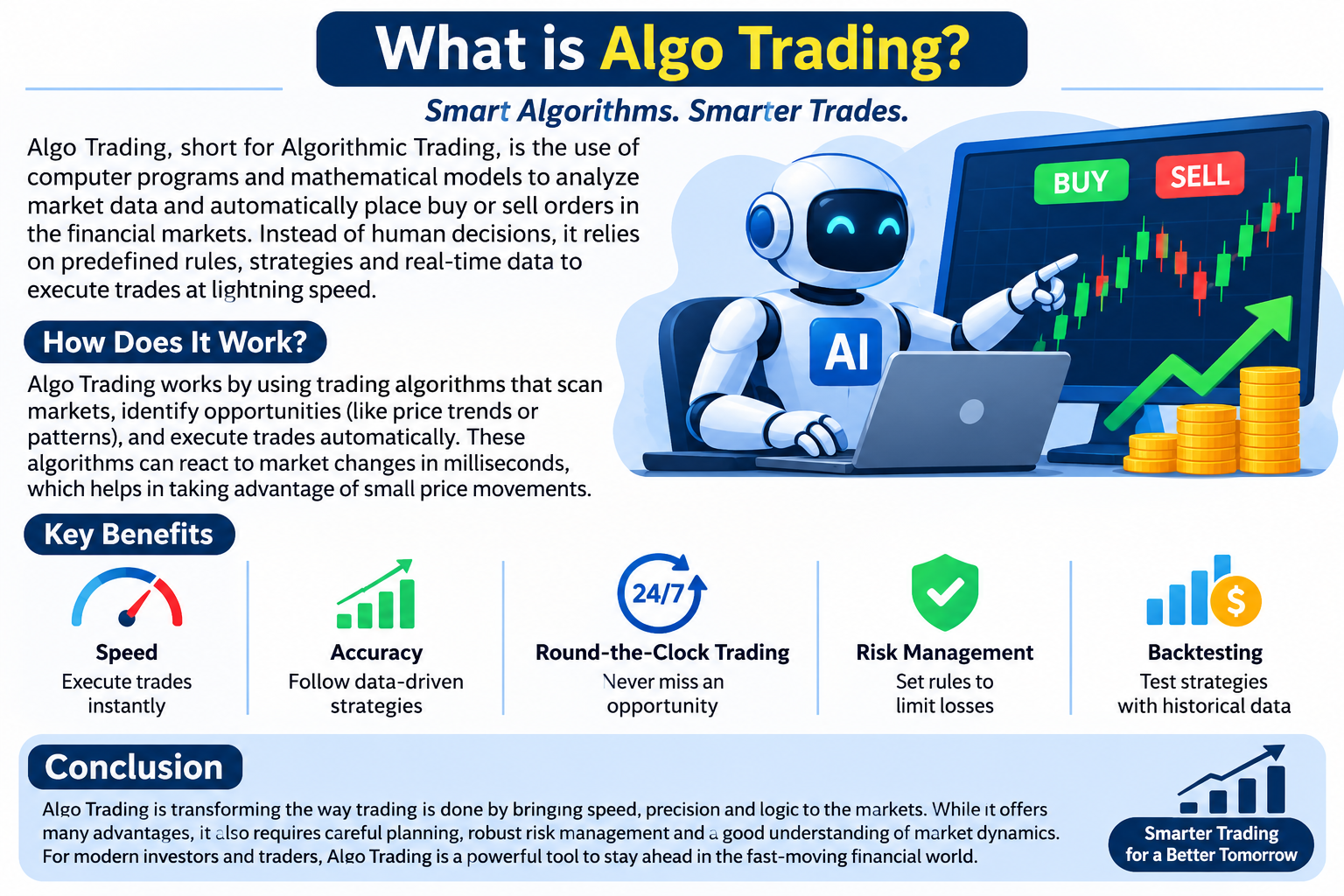
An algo-trading system generally follows a cycle. First, it receives market data from an exchange or broker. Next, its strategy checks that data against programmed conditions. When the conditions match, the system creates an order and sends it through a broker. The software can also monitor open positions and apply predefined exit or risk rules. For example, a simple strategy might buy when a short-term moving average rises above a long-term moving average, and sell when the reverse happens.
Algo Trading
Why Do Traders Use It?
Automation can analyse large amounts of data and execute orders quickly and consistently. It can reduce repetitive manual work and help traders follow a plan without reacting emotionally to every price movement. Strategies can also be backtested against historical data before they are used with real money. Common applications include trend-following, arbitrage, market making, and execution strategies that split large orders into smaller ones.
What Are the Risks?
Algo trading is not a guaranteed way to make profits. A strategy that performed well in historical tests may fail when market conditions change. Poor data, software bugs, network interruptions, unexpected price movements, and incorrect settings can lead to losses. Over-optimising a strategy for past data can also make it unreliable in live markets. Traders need monitoring, position limits, stop rules, and a way to pause the system when something goes wrong.
In simple terms, algo trading combines financial strategies with software to automate trading decisions. It can improve speed and consistency, but it still requires careful design, testing, supervision, and risk management. Beginners should learn how orders and markets work, practise with a simulator or paper-trading account, and understand the risks before committing real money.